Skip to content
Wade Womersley

wade.one

wade womersley – york based software engineer

  • Home
  • 2026
  • July
  • 18
  • Euclid Found Ancient Quasars in a Very Busy Young Universe

Euclid Found Ancient Quasars in a Very Busy Young Universe

Posted on July 18, 2026 By
Science

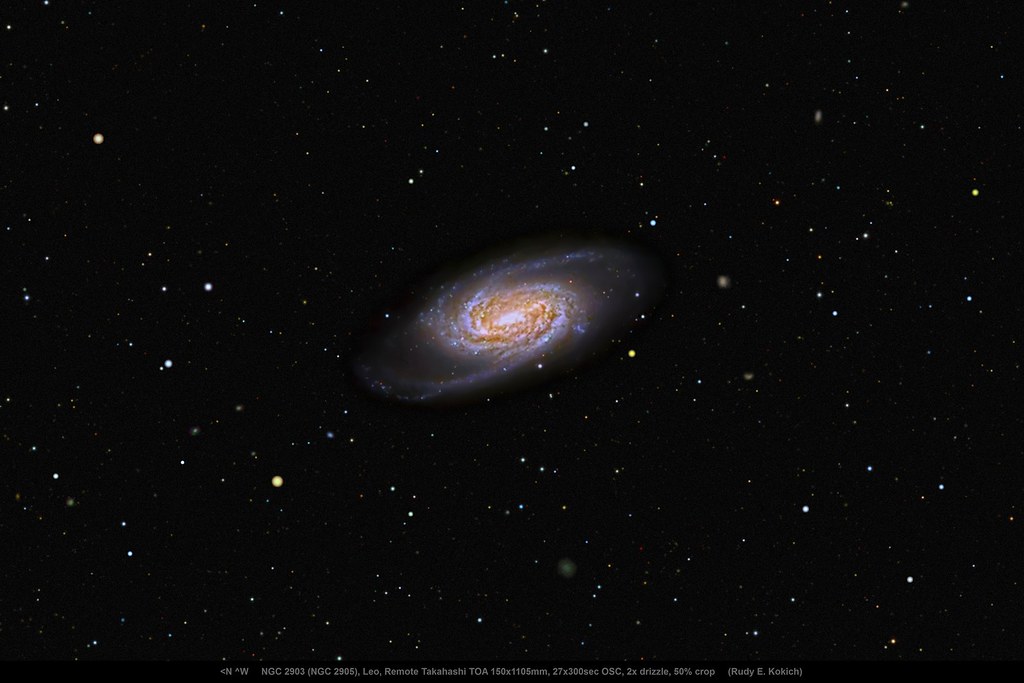
NGC 2903 with three distant quasars in the surrounding field

The early universe is easy to imagine as mostly empty darkness waiting for galaxies to get organised. Euclid has made that picture look much busier. The space telescope has found 31 exceptionally old quasars, including two from when the universe was only about five percent of its current age.

The Euclid result described by NASA includes 12 quasars from the first 770 million years after the Big Bang. The two oldest formed within the first 670 million years, and their light has taken roughly 13 billion years to reach us. A quasar is powered by matter heating up as it falls towards a supermassive black hole, producing enough light to outshine the surrounding galaxy.

What gets me is the amount of structure implied by that. The universe had to make galaxies, feed enormous black holes, and turn some of them into absurdly bright beacons while it was still cosmically young. Finding them is difficult because that ancient light is faint and can be confused with stars, so 31 is not just a nice collection of distant dots. It gives astronomers a better sample for working out how the first galaxies and black holes grew together.

Euclid’s main job is mapping billions of galaxies to study dark energy, but discoveries like this are the fun reminder that large surveys rarely answer only one question. NASA’s Roman Space Telescope should build on the same work. For now, I just like knowing that some of the oldest light we can see came from black holes already making a ridiculous amount of noise.

Share:

  • Share on Facebook (Opens in new window) Facebook
  • Share on X (Opens in new window) X
  • Share on Tumblr (Opens in new window) Tumblr
  • Share on Pinterest (Opens in new window) Pinterest
  • Share on LinkedIn (Opens in new window) LinkedIn
  • Share on Reddit (Opens in new window) Reddit

Related

Comments

comments

Tags: astronomy euclid quasars space

Post navigation

❮ Previous Post: CloudFormation Express Mode Is Fast Because It Stops Waiting

You may also like

Science
Enjoy the Aurora Borealis from Space in 4K Glory
April 18, 2016
Hardware
50 year 1-trillion fold increase in computing – keep on going!
May 25, 2015
News
Photo of Ant Holding 500 times its own Bodyweight
February 21, 2010
Science
The vastness of our solar system in a video at the speed of light
February 2, 2015
  • AI
  • artificial intelligence
  • Ego-centric
  • Events
  • Films
  • Food
  • Gaming
  • Gym
  • Hardware
  • Holidays
  • News
  • PHP
  • Programming
  • Random Stuff
  • Reviews
  • Science
  • SEO
  • Software
  • Software Engineer
  • Support
  • Uncategorized
  • Work

Copyright © 2026 wade.one.

Theme: Oceanly News Dark by ScriptsTown